
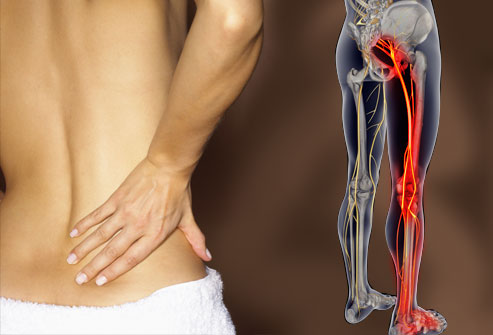
The longest nerve in the body is the sciatic nerve, which runs from the spinal cord to the buttocks and hips, continuing down the back side of each leg. When the sciatic nerve is damaged or injured, sciatica occurs, referring to the pain that is created throughout the entire nerve – from the spinal cord all the way down through both legs.
While sciatica is a medically recognized injury that needs to be treated on its own, it is also a major indicator of a much larger injury that has either taken place in a region of the body that can affect the sciatica, or a major injury could be on the brink of happening in one of these regions. With that, sciatica is both an injury and a symptom, reflective and indicative of problems like a herniated disc or trauma.
Sciatica can be intensely uncomfortable and irritating, causing mild to extreme pains shooting through the length of the body. And while that pain can be agonizing at times, it can sometimes only be treated with time and rest, which means that the discomfort could last as long as two months.
Symptoms
Pain that radiates from your lower (lumbar) spine to your buttock and down the back of your leg is the hallmark of sciatica. You may feel the discomfort almost anywhere along the nerve pathway, but it’s especially likely to follow a path from your low back to your buttock and the back of your thigh and calf.
The pain can vary widely, from a mild ache to a sharp, burning sensation or excruciating discomfort. Sometimes it may feel like a jolt or electric shock. It may be worse when you cough or sneeze, and prolonged sitting also can aggravate symptoms. Usually only one lower extremity is affected.
Sciatica symptoms include:
Pain. It’s especially likely to occur along a path from your low back to your buttock and the back of your thigh and calf.
Numbness or muscle weakness along the nerve pathway in your leg or foot. In some cases, you may have pain in one part of your leg and numbness in another.
Tingling or a pins-and-needles feeling, often in your toes or part of your foot.
A loss of bladder or bowel control. This is a sign of cauda equina syndrome, a rare but serious condition that requires emergency care. If you experience either of these symptoms, seek medical help immediately.
Causes
Sciatica frequently occurs when a nerve root is compressed in your lower (lumbar) spine — often as a result of a herniated disk in your lower back. Disks are pads of cartilage that separate the bones (vertebrae) in your spine. They keep your spine flexible and act as shock absorbers to cushion the vertebrae when you move.
But as you grow older, the disks may start to deteriorate, becoming drier, flatter and more brittle. Eventually, the tough, fibrous outer covering of the disk may develop tiny tears, causing the jelly-like substance in the disk’s center to seep out (herniation or rupture). The herniated disk may then press on a nerve root, causing pain in your back, leg or both. If the damaged disk is in the middle or lower part of your back, you may also experience numbness, tingling or weakness in your buttock, leg or foot.
Although a herniated disk is a common cause of sciatic nerve pain, other conditions also can put pressure on your sciatic nerve, including:
Lumbar spinal stenosis
Spondylolisthesis
Piriformis syndrome
Spinal tumors
Trauma
Sciatic nerve tumor or injury
Treatment
For most people, sciatica responds well to self-care measures. These may include use of hot packs or cold packs, stretching, exercise and use of over-the-counter (OTC) medications. Beyond the self-care measures you may have taken, your doctor may recommend the following:
Physical therapy
Prescription drugs
Epidural steroid injections
Surgery
Prevention
It’s not always possible to prevent sciatica, and the condition may recur. The following suggestions can play a key role in protecting your back:
Exercise regularly
Maintain proper posture
Use good body mechanics
For most people, sciatica responds well to self-care measures. You’ll heal more quickly if you continue with your usual activities, but avoid what may have triggered the pain in the first place. Although resting for a day or so may provide some relief, prolonged bed rest isn’t a good idea. In the long run, inactivity will make your signs and symptoms worse.

 Back On The ROAD To Good Health