
What is whiplash, anyway?
Whiplash involves a sudden movement of the head that can lead to the tearing of muscles, ligaments, and other soft tissues. It is a common result of a rear-end automobile collision, and can happen at low as well as high speeds.
As many as 3 million whiplash injuries occur every year in the United States. The cost includes not only the $29 billion spent every year on direct medical expenses and litigation, but decreased productivity, missed work, emotional distress, and long-term disability, as well. According to the American Academy of Orthopedic Surgeons, approximately 20% of those involved in rear-end motor vehicle accidents develop some symptoms in the neck region, usually within the first two days.
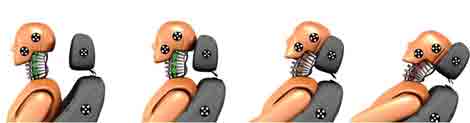
Many whiplash victims are stopped at a traffic light when a vehicle hits their rear bumper, pushing their car forward. The usual response is to slam on the brakes, bringing the car to a sudden stop and causing the driver’s neck to be jerked back and forth beyond its normal limits. Supporting tissues are stretched and may tear and bleed; the cervical spine flexes and then extends. This causes a soft-tissue injury sometimes described as neck sprain, but is more often called whiplash, or whiplash-associated disorder (WAD).
After a crash: The initial assessment
No definitive test for whiplash exists, which goes a long way toward explaining the controversy surrounding its diagnosis. X-rays, of course, won’t reveal soft tissue or nerve injury, although CT scans or MRI sometimes helps. Diagnosis is made by excluding other potential injuries, which makes your assessment and patient history particularly important.
There are some factors that make the patient more susceptible to whiplash. These include such things as the type of seat in the car and the position of the head and body at the time of impact.
Bench seats are more often linked to whiplash than bucket seats. Also, the further away the head is from the headrest at the time of impact, the greater the risk of injury.
In addition, the length of the patient’s neck is relevant. People who have long, swanlike necks are more at risk for whiplash than those with short necks, and those with lower body mass are at higher risk than their heavier counterparts.
In addition to neck pain or stiffness, symptoms associated with whiplash may include headache, dizziness, paresthesias in the arm or hand, lower back pain, temporomandibular joint (TMJ) pain, decreased range of motion, irritability, fatigue, and sleep disturbances. While the pain or stiffness generally develops immediately, it may be several days before other problems develop.
Symptoms of Whiplash
Neck stiffness can be an indication of an irritated or injured facet joint.
Cervicogenic headaches, as those associated with neck injury are known, are common in whiplash patients. Often the headache is the result of referred pain from nerves irritated by the rapid extension and flexion of the neck at the time of the collision. The greater and lesser occipital nerves, as well as nerves in the cervical spine and jaw, may be involved. Trigger points in other muscles can also be a source of headache.
Numbness and tingling in the fingers or arm are common after an automobile accident.
Back pain is typical, as well. The most likely source is the thoracic spine, which causes pain when extension or side-bending movements bring spine facets into contact with each other. But injury to the rib ligaments can also cause referred back pain.
The temporomandibular joint may also be affected, with pain occurring as a result of a ligament sprain within the joint. Symptoms of TMJ include popping or cracking in the joint, pain with chewing, and headache.
While irritability, fatigue, and difficulty sleeping are frequently associated with trauma, they’re not likely to be evident immediately.
Getting moving will help the patient heal
Ice can be applied to tender areas for the first 24 hours post-injury, followed by gentle massage and aerobic activity such as walking. After that, heat application may help relax tense muscles. Intermittent use of a soft cervical collar, or even a rolled up towel, during the first three weeks post-injury will help support the injured muscles.
Electric Stim, ultrasound, strength training, range-of-motion exercises, physical therapy, and cervical traction help muscles regain their ability to adequately support the head and neck.
Over-the-counter and prescription medication may be helpful for symptom control. There is no one “best” drug for whiplash symptoms. Rather, the choice of medication depends upon the type, severity, and duration of pain as well as the patient’s overall health. NSAIDs such as aspirin, ibuprofen, and naproxen (Naprosyn) may be appropriate for most patients.
If a patient has significant numbness and tingling in the arms or the legs muscle and nerve testing, EMG Testing, may be ordered to confirm nerve damage or inflammation.
Some patients with WAD may have a long road ahead of them. To help on that journey, it is important that the patient reduce stress and get adequate sleep. It is important to eat a balanced diet and continue physical therapy, if ordered, during the recovery period.
This information is compliments of:
WASHINGTON MEDICAL
DR. ROBERT LABACZEWSKI AND DR. DOMINIC LAGANELLA
DR. JOHN ASHBY, PMR
EBENEZER OGUNTUASE, PT
TO CONTACT OUR OFFICE,
CALL (856) 582-8041 (SEWELL) OR
(856) 205-1422 (VINELAND)
WWW.WASHINGTONMEDICALPA.COM
ON SITE PHYSICAL THERAPY AND EMG/NVC TESTING

 Back On The ROAD To Good Health