
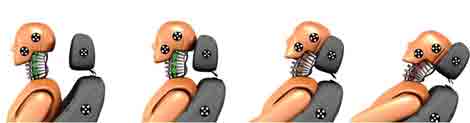
After pain symptoms, dizziness and unsteadiness are the most common symptoms you may experience after sustaining a whiplash injury.
According to the journal Spine, you are likely to experience dizziness associated with an auto injury as a result of:
Injury to the cervical spine: The cervical spine plays a critical role in the body’s ability to balance because of it its connection to the postural control system. The PCS receives this information from the proprioceptors in the neck. In an auto collision, trauma to the neck can disrupt proprioceptors causing dizziness.
Benign paroxysmal position vertigo: Otoliths inside the inner ear tell the brain where the head is positioned. In an auto collision, violent movement of the head can jar otoliths from their normal position. This caused confusion of the PCS and dizziness.
Vascular injury: Damage to blood vessels n the neck caused by trauma can disrupt the blood flow to the brain causing dizziness.
Brain Injury: Mild traumatic brain inure can cause confusion, dizziness, and memory loss.
Dizziness appears to be linked to anxiety and pain symptoms which may become chronic. If you have dizziness following an automobile accident, it is important to be evaluated. Don’t assume that your symptoms will lesson with time.
This information is compliments of:
WASHINGTON MEDICAL
DR. ROBERT LABACZEWSKI AND DR. DOMINIC LAGANELLA
TO CONTACT OUR OFFICE,
CALL (856) 582-8041 (SEWELL) OR
(856) 205-1422 (VINELAND)
WWW.WASHINGTONMEDICALPA.COM
 Back On The ROAD To Good Health